
Humble Beginnings
Cherie began training dogs in 1989 after a moment that permanently changed her relationship with training. Her dog, Amanda, broke away while off leash and was struck by a car. Although Amanda survived, the experience made one thing painfully clear: Cherie needed to learn how to train — not just manage — her dog.
She enrolled in a well-known Sacramento training facility and quickly excelled. Cherie and Amanda became a demonstration team, and Cherie assisted instructors and attended every class available. On leash, they were impressive. Off leash, however, the truth was harder to ignore.
At the time, dog training relied heavily on correction-based methods — what many referred to as “yank and crank.” Amanda responded to equipment, but when that equipment was removed, she disappeared. No amount of technique could make off-leash reliability possible. The dog complied with tools, not with understanding.
That disconnect stayed with Cherie.
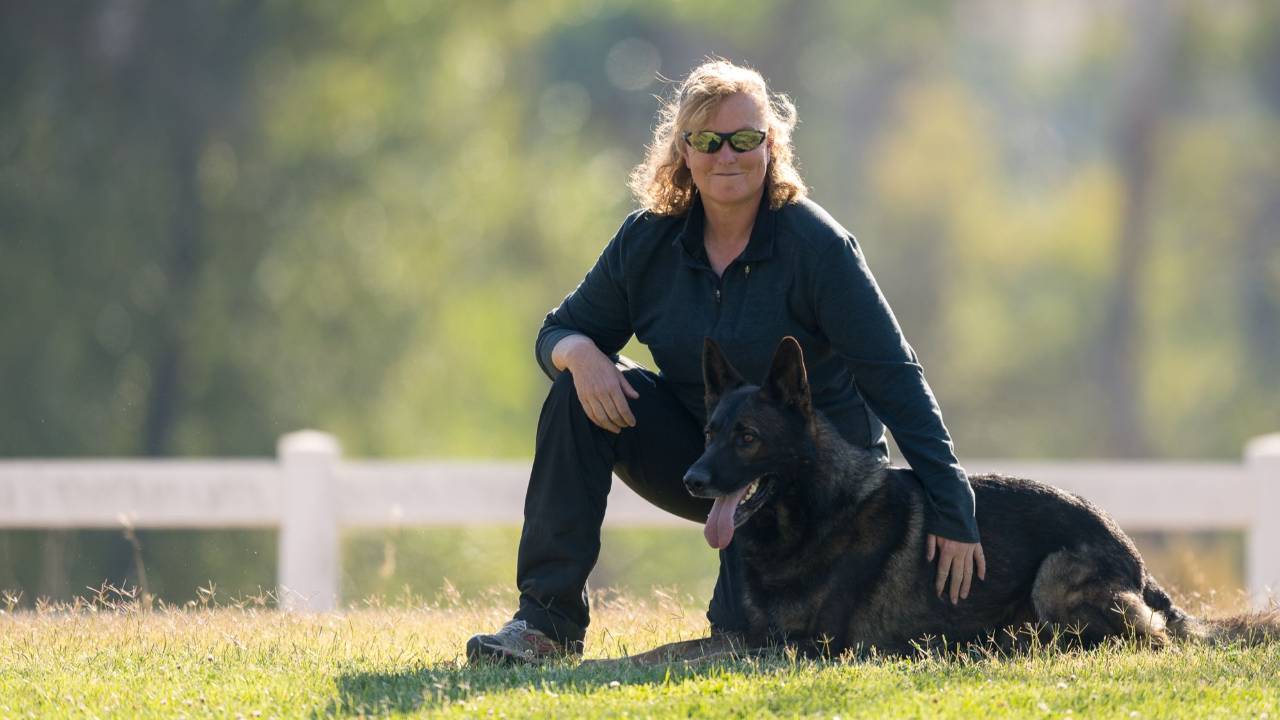
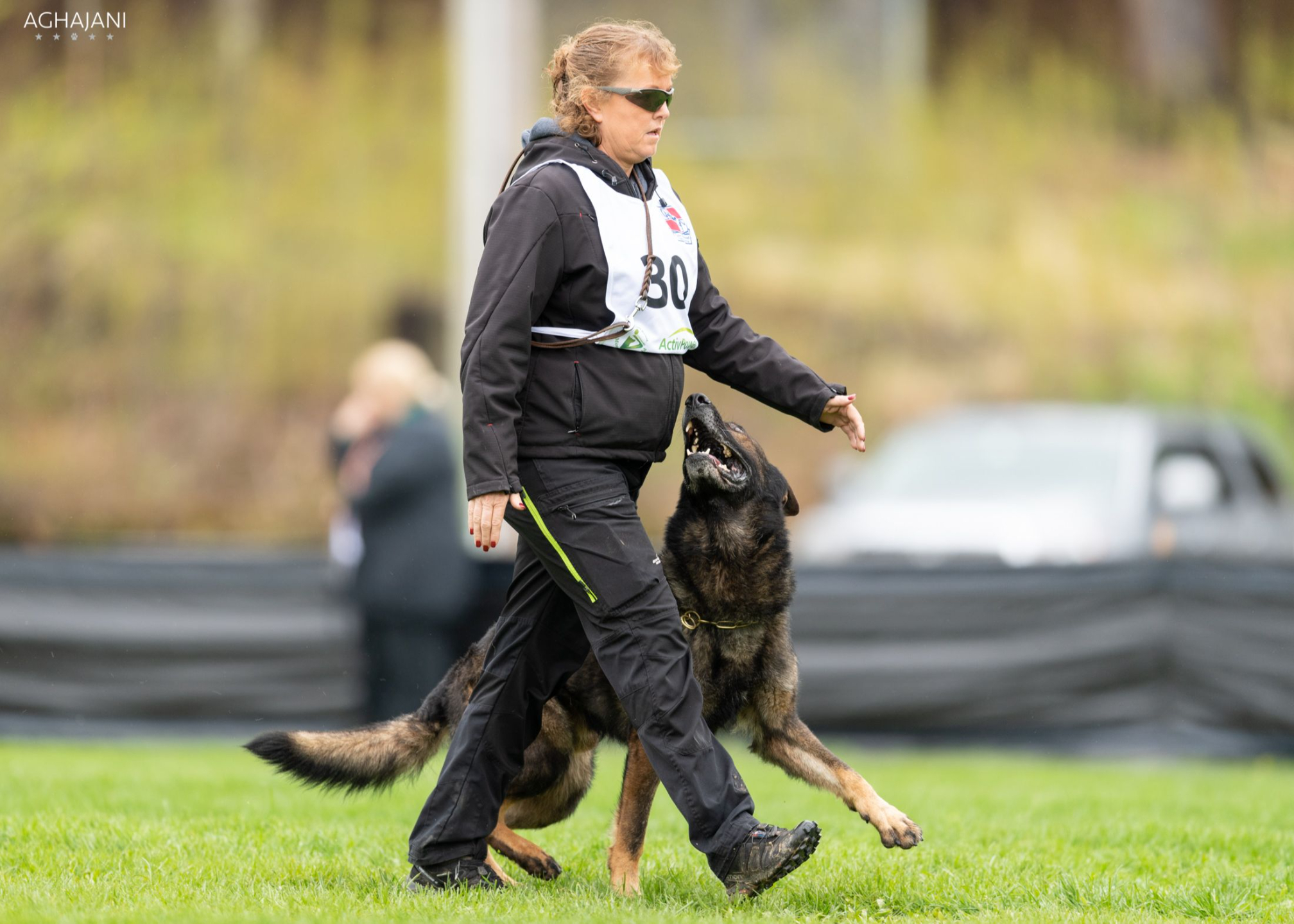
Graduate School — and a Turning Point
After three years, Cherie stepped away from training to complete graduate school. When she returned nearly four years later, the dog training world had changed dramatically.
Training conversations now included marker systems, learning theory, and examples drawn from marine mammal training — dolphins and whales trained without force or correction. Instead of dominance, trainers spoke about clarity, motivation, and responsibility.
Cherie started over. No equipment. No shortcuts. Just learning how to communicate what mattered to Amanda and how to structure training so that understanding, not compliance, drove behavior.
Within four months, Amanda could be trusted off leash — something that had been impossible for more than seven years. The difference wasn’t the dog. It was the information Amanda had been given. Cherie realized that Amanda had respected equipment, but had never truly understood how to work with her handler.
That realization shaped everything that followed.
A Shift in Philosophy
This experience led to a lasting shift in Cherie’s training philosophy. While equipment can be useful, it can also mask gaps in understanding. Lasting reliability comes from clear communication, thoughtful progression, and accountability — not force or control.
In 1997, Cherie acquired her first working-line German Shepherd and began training in Search and Rescue. She certified two dogs in multiple disciplines, including Area Search, Human Remains Detection, and Avalanche work. She served on search teams throughout California and Nevada, became an evaluator for her organization, and was selected as part of the original Yosemite National Park search team, known as YoDogs.
Competitive Obedience and International Experience
In 2006, Cherie began competing in IPO/IGP (formerly Schutzhund). Within 18 months, she titled her first dog to Schutzhund 3 and earned a qualifying score for Nationals — an unusually fast progression in a demanding sport.
Since then, Cherie has titled more than ten dogs, including multiple BH titles, IPO2, and five dogs to Schutzhund 3. She has represented the United States internationally, competing in Belgium (2018) and England (2019), where she and her dog Baxter placed 6th overall.
Baxter’s story is particularly telling. Cherie was his fifth handler. Despite talent and drive, he struggled to succeed in previous homes. Through clear structure, fairness, and consistency, Baxter flourished. Their partnership stands as a testament to what dogs can achieve when clarity replaces force.
Today
In addition to operating Gold Country K9 full time, Cherie serves as Executive Director of Infinite PawsAbilities, a 501(c)(3) nonprofit that rescues dogs from shelters and teaches incarcerated individuals at Mule Creek State Prison to train them. Suitable dogs may go on to service work, search and rescue, or facility roles.
Cherie now focuses heavily on mentoring the next generation of trainers through the Pro-Trainer Academy, a program built on the belief that real competence requires hands-on experience with real dogs. By combining structured online education with access to an active training facility, students gain exposure to the full spectrum of dog training — foundations, complexity, and real-world challenges.
This philosophy is the backbone of everything Cherie teaches today:
clear communication, thoughtful training, and responsibility — for both dogs and handlers.
Why Gold Country K9 Academy
Gold Country K9 Academy exists because good training requires more than techniques — it requires understanding, structure, and accountability.
Over decades of work across pet training, competitive obedience, search and rescue, service dog development, and trainer education, one pattern has remained consistent: dogs struggle not because they are incapable, but because the information they receive is unclear, inconsistent, or incomplete. When training breaks down, it is almost always a communication problem before it is a behavior problem.
At Gold Country K9 Academy, we teach people how to become effective coaches for their dogs. That means learning how dogs learn, how to build skills thoughtfully, and how to progress training so it holds up beyond controlled environments. We value clarity over quick fixes, structure over trends, and long-term reliability over surface-level results.
Our programs are built to support real work with real dogs. We do not rely on shortcuts, gimmicks, or one-size-fits-all solutions. Instead, we provide a framework that can be applied across goals — whether that’s everyday obedience, advanced sport work, service dog training, or developing professional-level handling skills.
This academy is not for everyone. It is for people who want to understand what they’re doing, why they’re doing it, and how to adjust when training becomes complex. For those willing to engage in that process, Gold Country K9 Academy offers the tools, guidance, and structure to build skills that last.
How Can We Help You Get Started?
People come to Gold Country K9 Academy for different reasons — but everyone begins by understanding how dogs learn and how training actually works.
To help you find the right starting point, we offer two short quizzes designed to clarify where you are now and what type of support may be most helpful.
For Aspiring Dog Trainers
If you’re considering a future in dog training — or want to deepen your skills beyond basic obedience — this quiz will help you assess your current foundation, identify gaps, and determine whether a professional training path makes sense for you.
→ Take the Trainer Foundations Quiz

For Dog Owners
If you’re training your own dog and want clearer communication, more reliability, or support navigating challenges, this quiz will help you identify strengths, common sticking points, and where additional structure could make a difference.
→ Take the Dog Training Quiz
If you’re not sure where to begin, both paths ultimately lead through our core training system, Communicate with Clarity™, which provides the foundation for all of our programs.
